If you think Dark Souls invented punishing difficulty, you clearly never threw your controller at the wall while playing Ghosts 'n Goblins. Released by Capcom in 1985, this side-scrolling platformer didn't just challenge players—it actively seemed to hate them. Your knight, Arthur, had to rescue Princess Prin-Prin from Satan himself, and the game made sure you'd earn every single pixel of progress.
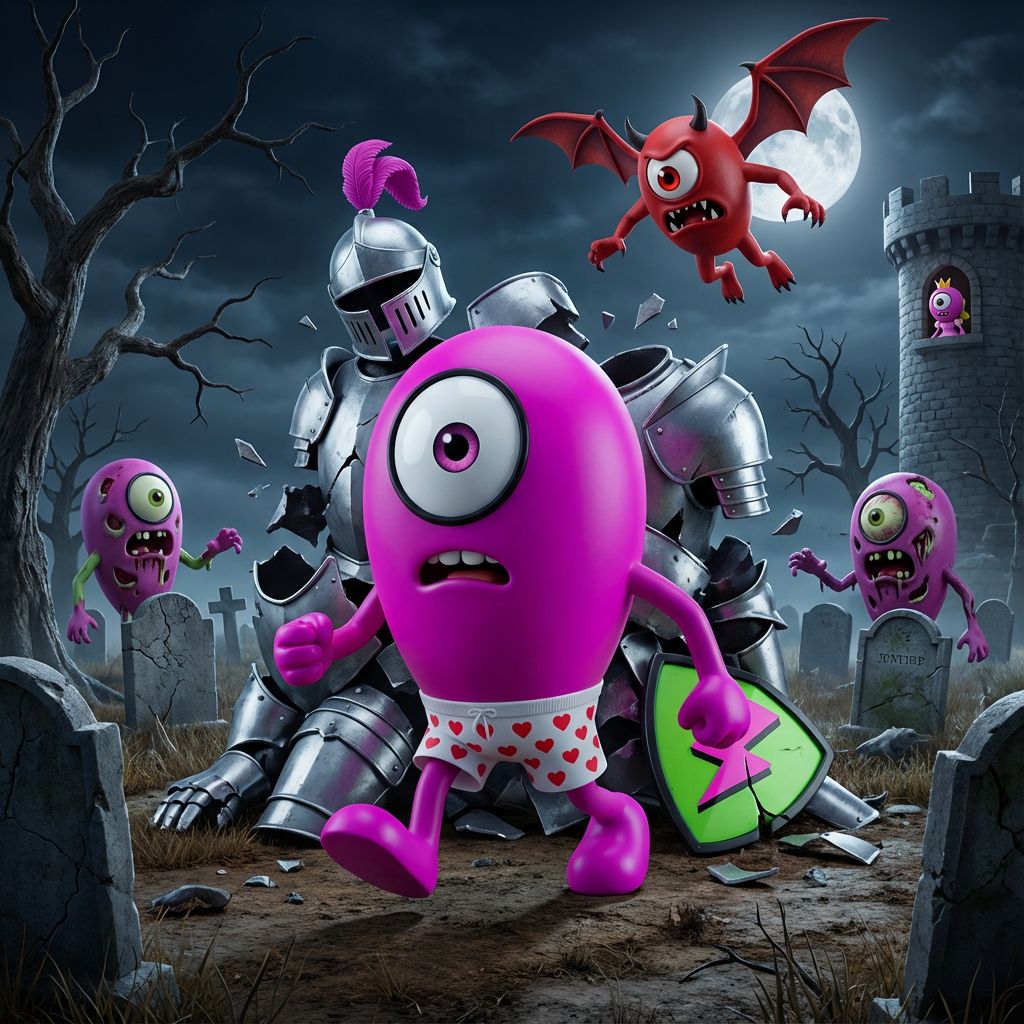
Here's the thing that made Ghosts 'n Goblins special: it was drop-dead gorgeous for its time. Director Tokuro Fujiwara created a game that looked like a twisted Halloween greeting card come to life, with detailed graveyards, haunted forests, and grotesque enemies that seemed impossibly detailed for 1985 hardware. Arthur's armor would fall off when hit, leaving him vulnerable in his polka-dot boxers—a humiliating touch that somehow made the brutal difficulty feel personal. The game's visual personality was so strong that kids would crowd around the cabinet just to watch someone else die repeatedly.
But the real kicker? Even if you managed to beat the game's six levels—which required near-superhuman reflexes and pattern memorization—you'd be greeted with a message telling you it was all an illusion. You had to play through the entire game again on a harder difficulty to see the true ending. This wasn't mentioned anywhere in the game beforehand. Players who'd just spent their last quarters celebrating victory would watch in horror as the game essentially said "nice try, sucker" and sent them back to the beginning. It was trolling before trolling had a name.
Ghosts 'n Goblins became Capcom's fifth best-selling arcade game and spawned a franchise that's still kicking today, but its legacy is really about what it proved. You could make a game almost impossibly hard, even borderline unfair, and players would keep coming back if you wrapped that difficulty in enough personality and visual charm. The game's composer, Ayako Mori, created a soundtrack so catchy that the main theme still gets remixed by fans nearly 40 years later. That combination of punishing gameplay, dark humor, and genuine artistry created something that transcended the "quarter muncher" label most hard arcade games got stuck with.
The series eventually softened its edges—slightly—in later entries, but that original game remains a beautiful, infuriating monument to an era when games didn't hold your hand. They ripped it off and fed it to a zombie while laughing maniacally.
18,809 m²